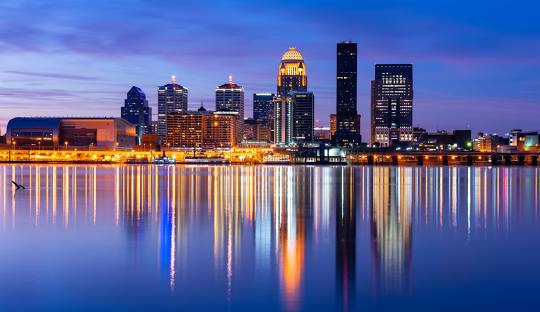
Louisville Population Surpasses 640,000 with Growing Diversity
Posted by on
Louisville, Kentucky, the state’s largest city, has a population of approximately 640,796 in 2024, reflecting steady growth since the 2003 merger with Jefferson County, which expanded city limits and combined populations. Prior to the merger, Louisville’s population had declined for several decades, from 361,706 in 1970 to 256,231 in 2000, before jumping to 597,337 in 2010.
The city has become increasingly diverse. According to the 2020 Census, the racial and ethnic composition is: 60.36% White (non-Hispanic), 23.23% Black or African American, 3.32% Asian, 0.08% Pacific Islander, 0.19% Native American, 0.48% other races, and 4.41% mixed-race. Meanwhile, Hispanics or Latinos of any race make up 7.93% of the population. These figures show a notable increase in minority populations over the previous decade, especially among Asians, Hispanics, and multiracial residents.
Of the 287,012 households in the city, 29.6% have children under 18, 45.2% are married couples, and 14.7% are female-headed households with no husband present. Individual households account for 30.5%, and 10.3% of households include someone aged 65 or older living alone. The average household size is 2.37, while the average family size is 2.97.
Age distribution in Louisville is fairly balanced, with 24.3% under 18, 8.9% from 18 to 24, 30.4% from 25 to 44, 22.8% from 45 to 64, and 13.5% 65 or older. The median age is 37, and the gender ratio shows 91.6 males for every 100 females, dropping to 87.6 males per 100 females aged 18 and over.
Economic data shows a median household income of $51,960, with family households earning $67,965 and non-family households earning $32,446. Median income is higher for males ($36,326) than females ($30,464), and the per capita income was $23,304. Approximately 9.5% of families and 15.1% of the population live below the poverty line, including 23.5% of children under 18 and 8.2% of seniors 65 or older.
Louisville is also home to a significant Cuban-American community of around 60,000 residents, making Jefferson County 12th in the nation for Cuban-American population. Overall, the city reflects a growing, diverse population with a mix of family structures, incomes, and cultural communities, solidifying its status as a dynamic urban center in the Upper South.